
The principle of intense pulsed light or IPL technology:
This method is very similar to laser hair removal.
Its difference is to be equipped with an intense light which distributes “flashes” of treatment instead of a laser beam. It is today one of the most affordable and most widely practiced in Europe.
Pulsed light, also called IPL (Intense Pulsed Light), sends light which will be absorbed by the black pigment of the hair.
The intense pulsed light induces heat – up to 70°C – absorbed by the hair and conducted to its root to destroy it.
The intense locally pulsed light transforms into heat and creates a micro reaction. The “flash” is converted into heat on contact with the hair.
This induces a thermal reaction at the hair root (the hair bulb) which alters and slows down regrowth.
From the first sessions, the hair falls out and almost no longer grows back.
This pulsed light has a spectrum ranging from 700 to 1,200 nanometers.
This is its big difference with the dermatologist's laser, pulsed light (or flash lamp) has a WIDER spectrum, even if it is less targeted than the laser.
Pulsed light is much less invasive and proves to be just as effective provided that the depilated areas are touched up regularly (every 2 or 3 months after the first sessions).
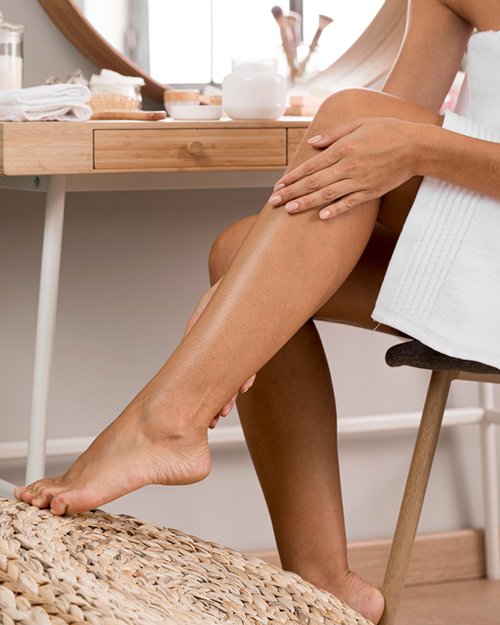
“Smooth, clean legs all year round and a swimsuit that's always impeccable for going to the pool or the beach??
It's a completely accessible dream, which you can realize thanks to IPL (intense pulsed light).
Hair removal with pulsed light is, depending on the skin, very long-lasting and/or perfectly permanent hair removal!”
Good news: Intense pulsed light hair removal is non-invasive and absolutely does not hurt!
The darker the hairs treated, the more effective and faster the result will be.
The ideal areas for pulsed light hair removal are the armpits, certain parts of the face, the bikini line (except sensitive areas) as well as the legs or half-legs.
And a little clarification, pulsed light hair removal is also suitable for men, for the same areas, except for the beard and testicles.
Before each session your skin must not be tanned and must have been previously shaved, this is really important.
Our practitioner will equip you with protective glasses so as not to let reflections or flashes come into contact with your eyes, don't worry.
For a job well done, you must “flash” every 2 weeks for 2 to 3 months, then once a month for 2 to 4 sessions, depending on regrowth for a good result.
Taboo:
- Pregnant women.
- Sunstroke.
- Hypersensitive to light or medications, or if you are taking medications that are sensitive to light.
- Vitamin use in the last 6 months.
- Not representative of naive or malignant pathological changes in the treatment area.
- Pacemaker or quiver dissipation machine user.
- Herpes or trauma.
- Button folder.
- People who accept Hirudin treatment etc. (should stop using it before 2 weeks).
- Severe diabetic patient, suffering from high blood pressure or epilepsy.
Advantages :
- After each treatment your hairs will be even finer and above all very rare.
- It’s long-lasting hair removal.
- Hair will grow back much more slowly.
- But be aware that you will generally have to wait until the sixth or twelfth session to obtain a satisfactory result.
- This treatment offers comprehensive treatment. Unlike other hair removal methods such as waxing or razor which are only dedicated to certain areas.
Disadvantages ?
Not really, you just have to shave two days before each session so that the hairs are in the regrowth phase.
You may only feel a little tingling or tickling in certain areas.
How does a permanent hair removal session work with us?
- You must arrive without a tan
- Do not do your sessions if you have started to expose yourself to the sun.
- No longer pluck your hair but shave it for the sessions.
- Sessions every one or two months depending on how long the hair grows back.
Attention !
You must avoid exposing yourself to the sun during the treatment, then for the 15 days following the last session.

